
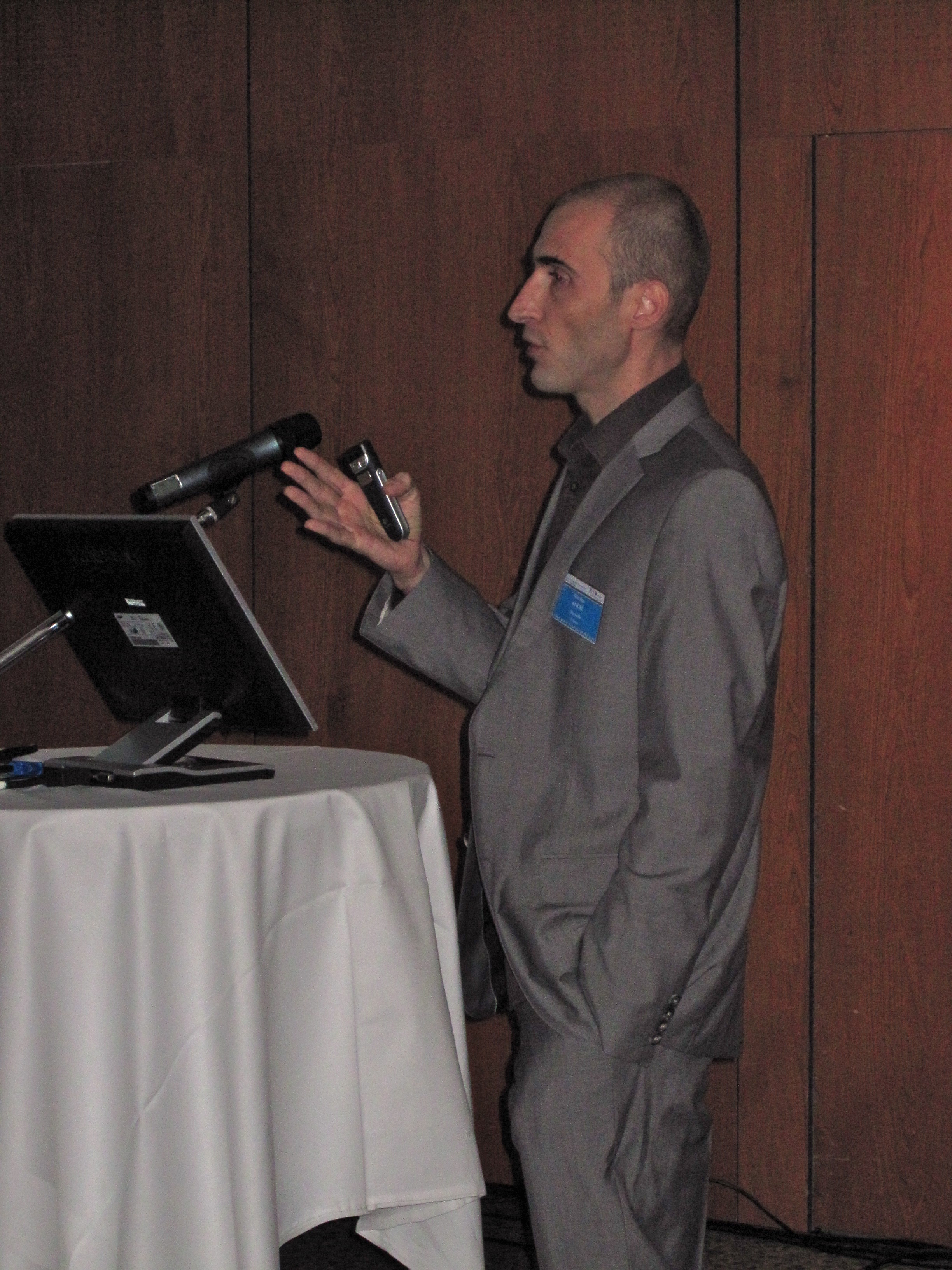
Pr. Nicolas André is Professor in Pediatric Oncology in the Department of Hematology & Pediatric Oncology in the “Hôpital pour Enfants de La Timone”, AP-HM and head of the SMARTC CRCM- (Centre de Recherche en Cancérologie de Marseille), AMU, France.
He gained his medical degree in 2002 and a doctoral degree in 2003. He is the former president of the “Société Francophone de Recherche en Pédiatrie”. Currently, his research interests and topics include paediatric brain tumors, pediatric rare tumors and pharmacology (new anticancer agents, metronomic chemotherapy, microtubule-targeting agents).
His has developed over the years an international expertise in metronomic chemotherapy.
The use of metronomic chemotherapy in "his" own patients has convinced him that this tool could be valuable for children in developing countries. He initiated with Dr Fousseiny Traore a pilot study in Bamako (Mali) that further convinced him of the unveiled potential of metronomic chemotherapy.
He then imaginated Metronomics-Global-Health–Initiative as the structure that could promote the development of metronomics with the highest standards and pave the way for new global strategies to fight cancer in developing countries.
He will be the leader of Metronomics-Global-Health–Initiative connecting & coordinating a community of institutions and people who will embark in this forward-looking project as inventors, ambassadors, sponsors and supporters.
He is the author of over 100 peer reviewed publications and book chapters and has given lectures on metronomics worldwide.
Selected publications about metronomics:
– Ciccolini J, Barbolosi D, Meille C, Lombard A, Serdjebi C, Giacometti S, Padovani L, Pasquier E, André N. Pharmacokinetics and Pharmacodynamics-Based Mathematical Modeling Identifies an Optimal Protocol for Metronomic Chemotherapy.
Cancer Res 2017
– André N, Tsai K, Carré M, Pasquier EMetronomic Chemotherapy: Direct Targeting of Cancer Cells after all? Trends Cancer 2017
– André N, Banavali S, Pasquier E.Paediatrics: Metronomics - fulfilling unmet needs beyond level A evidence.
Nature Rev Clin Oncol 2016
– André N, M Carré, Pasquier E. Metronomics : toward personalized chemotherapy. Nature Rev Clin Oncol 2014
– André N, Pasquier E . For cancer seek and destroy better than live and let live? Nature 2009
– André N, Banavali, S Snihur J, Pasquier E . Has the time come for metronomics in low-income and middle-income countries? Lancet Oncology 2013
– Pasquier E, Kavallaris M, André N. Metronomic Chemotherapy : New rationale for new directions. Nature Rev Clin Oncol 2010
– André N, Pasquier E, Kamen B. Looking at the seemingly paradoxical effect of vinblastine in anaplastic large cell lymphoma from a “metronomic” point of view J Clin Oncol 2011
– André N et al.Pilot study of a pediatric metronomic 4-drug regimen. Oncotarget. 2012
– Pasquier E, Ciccolini J, Carré M, Giacometti S, Fanciullino R, Pouchy C, Montero MP, Serdjebi C, Kavallaris M, André N. Propranolol potentiates the anti-angiogenic effects and anti-tumor efficacy of chemotherapy agents: implication in breast cancer treatment.Oncotarget 2011
– Traore F, Nanoudiara M, Pasquier E, André N. Metronomic chemotherapy in a low-income country: METRO-MALI-01 J Pediatr Hematol Oncol. 2011
– André N, Fousseyni T, Banavali S, Pasquier E. Metronomic chemotherapy : a way forward for low income countries? Oncopedia 2012
– André N, Pasquier E, Kamen E. Can Targeted Therapy be Successful without Metronomic Scheduling ? Currents Topics in Medicinal Chemistry 2012
Other publications
– André N, Guercio B, Pasquier E. Investment in cancer studies in countries of low and middle income. The Lancet. 2013
– André N. Hippocrates of Cos and Apoptosis. The Lancet 2003
– André N. Involving children in paediatric oncology decision-making. Lancet Oncol 2004.
– Mateo V, Ménager V, de Saint-Basile G, Stolzenberg MC, Roquelaure B, André N, et al. Perforin-dependent apoptosis compensates Fas-deficiency in Activation-Induced Cell-Death of human T lymphocytes. Blood 2007
– Cicollini J, Dahan L, André N et al. CDA residual activity in serum is a predicitive marker of severe early toxicities after gemcitabine-based chemotherapies. J Clin Oncol 2010
– Ciccolini J, Mercier C, Dahan L, André N. pharmacogenetic of gemcitabine : time for a change ! Nature Rev Clin Oncol 2011
– Padovani L, André N, Constine L, Murraxiole X. Neurocognitive toxcity of radiotherapy in children with cancer. Nature Reviews Neurology 2012


Comment on this article
discussion